Pooping Should Take 30–90 Seconds, Not 10 Minutes
 Dr. Raghav ThukralM.D. (Ayurveda)
In this article
- Healthy Digestion Is About Flow, Not Force
- Why Sitting on a Toilet Makes Pooping Harder
- How Squatting Straightens the Path
- You Need Leverage Before More Fiber
- How Long Pooping Should Actually Take
- Why Sitting Too Long Makes Constipation Worse
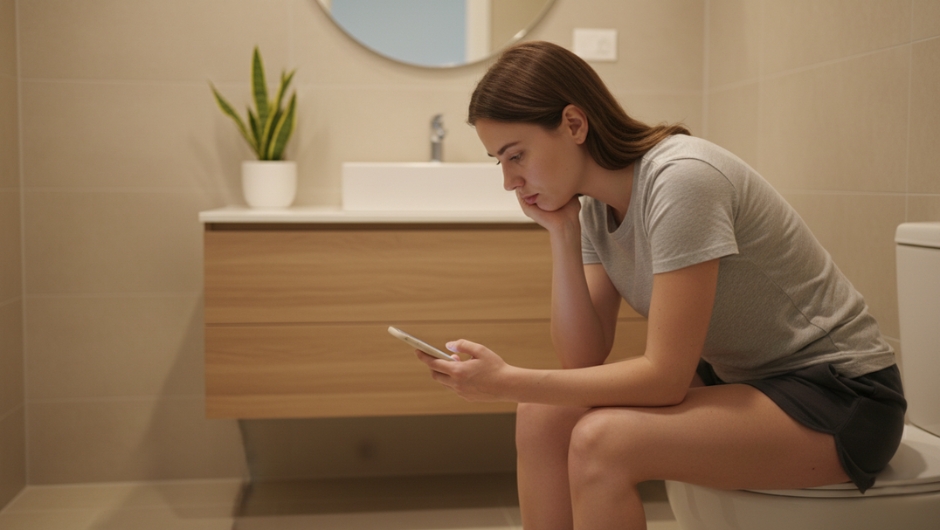
- The Hidden Problem of Scrolling on the Toilet
- What a Healthy Urge Should Feel Like
- Best Times of the Day to Poop
- How to Retrain Your Natural Pooping Reflex
- Fix Hydration Before Using Laxatives
- Focus on Rhythm, Not Quantity
- Constipation Is a Coordination Issue
- Make Pooping a Reflex, Not a Ritual
Pooping is a natural reflex, not a long activity. When digestion is healthy, you feel the urge, you go, and you’re done within 30–90 seconds. No pushing, no waiting, no scrolling on your phone. If you’re spending 10 minutes in the bathroom, it’s a sign that your gut motility is off, not that you’re doing something wrong.
Healthy Digestion Is About Flow, Not Force
Your body is designed to eliminate effortlessly. When your colon and nervous system are in sync, bowel movements happen smoothly. You shouldn’t need to strain or “try.” If elimination feels difficult, it means the communication between your gut and brain is disturbed.
Why Sitting on a Toilet Makes Pooping Harder
Modern toilets force you into an upright sitting position. In this posture, the rectum bends at nearly a 90-degree angle, making it harder for stool to pass. It’s like trying to push water through a kinked hose. This is why many people strain or sit for a long time without feeling fully empty.
How Squatting Straightens the Path
Squatting changes everything. When you squat, or raise your feet on a small stool, the rectum straightens and the pelvic floor muscles relax. This creates a direct, open path for stool to pass easily. That’s why squat toilets or footstools can make bowel movements faster, cleaner, and more complete.
You Need Leverage Before More Fiber
Many people add fiber without fixing posture. But before increasing fiber, your body needs proper alignment. Raising your feet and leaning slightly forward allows gravity and your core muscles to work with your colon, not against it. Often, this single change reduces straining immediately.
How Long Pooping Should Actually Take
A normal bowel movement should take 30–90 seconds. If you’re sitting for more than 5 minutes, your colon may be sluggish or your nervous system may be stuck in a stress or freeze mode. Long bathroom sessions weaken your natural urge reflex over time.
Why Sitting Too Long Makes Constipation Worse
When you sit on the toilet for too long, especially without a strong urge, the colon’s natural movement (peristalsis) slows down. Over time, your body forgets how to initiate a strong, clear signal to poop. This leads to chronic constipation and incomplete evacuation.
The Hidden Problem of Scrolling on the Toilet
Using your phone in the bathroom overstimulates your brain. Phones increase dopamine and cortisol, which block the calm, relaxed state your colon needs to release stool. This is why “scrolling constipation” is real. Your gut cannot fully relax while your brain is overstimulated.
What a Healthy Urge Should Feel Like
A healthy urge to poop is gentle but clear. It’s not painful, urgent, or forced. It simply feels like “it’s time.” Ignoring this signal causes stool to sit longer in the colon, where water gets absorbed, making it harder and drier.
Best Times of the Day to Poop
Your colon is most active early in the morning, between 5–7 AM, and 20–30 minutes after meals. This is due to the gastrocolic reflex. Missing these windows often means your body won’t attempt elimination again until the next natural wave.
How to Retrain Your Natural Pooping Reflex
Only go to the toilet when you feel a real urge. Leave your phone outside the bathroom. Elevate your feet using a stool and lean slightly forward. Take slow, deep breaths and exhale as you go. Let relaxation do the work, not pushing.
Fix Hydration Before Using Laxatives
If you’re still straining, don’t reach for laxatives immediately. Start with proper hydration by drinking about half your body weight (in pounds) in ounces of water daily. Adequate magnesium and soluble fiber also help soften stool and support smooth movement.
Focus on Rhythm, Not Quantity
The goal isn’t more poop, it’s better rhythm. A healthy gut works in coordination with your nervous system. Elimination should feel calm, quick, and complete, like a deep exhale.
Constipation Is a Coordination Issue
Constipation isn’t about laziness. It’s about lost coordination between hydration, posture, gut motility, and the nervous system. When you fix the sequence, bowel movements become effortless again.
Make Pooping a Reflex, Not a Ritual
Stop turning bathroom time into screen time. Pooping should be quick and natural. Raise your feet, breathe deeply, and trust your body. When digestion is healthy, your colon knows exactly what to do.
Related treatments
- Digestive Disorders Program: Digestive Care
Disclaimer: This article is for general education and is not a substitute for personal medical advice. Please consult a qualified doctor before making changes to your diet, supplements or medicines.