Indian vs. Western Washrooms – Which One Is Actually Healthier?
 Dr. Raghav ThukralM.D. (Ayurveda)
In this article
We’ve all faced the choice. You walk into a restroom and see two options: the sleek, modern Western commode or the traditional Indian squat pan. For decades, we assumed the Western toilet was the “upgrade” a sign of luxury and progress.
But what if I told you that your ancestors might have known something your plumber doesn’t?
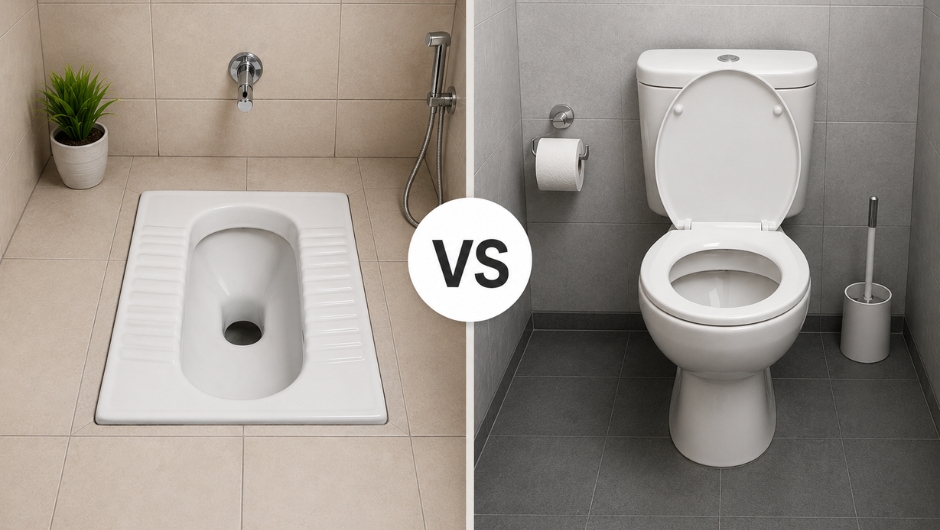
Let’s settle the debate once and for all. We are putting Indian Washrooms against Western Washrooms to see which one wins the health battle.
The Biomechanics of Pooping
Indian Washroom (The Squat):
Human beings are designed to squat. When you use an Indian washroom, you achieve the Natural Squatting Position. This involves a 35- to 38-degree angle between the torso and thighs. This position relaxes the puborectalis muscle, allowing the colon to straighten out. Result? Easy bowel movement with zero strain.
Western Washroom (The Sit):
Let’s be honest, sitting on a throne feels nice, but it’s Unnatural. The 90-degree angle actually kinks the colon, acting like a crimped garden hose. You have to push harder to get the same result, leading to incomplete bowel movements and unnecessary strain.
Digestive Health & Constipation
Indian Washroom:
Because the squat allows for complete evacuation of the bowels, you aren’t leaving toxic waste sitting in your system for hours. This leads to better digestion and is a powerful preventative measure against chronic constipation.
Western Washroom:
The sitting position often leads to “incomplete evacuation.” You feel like you have to go again, 20 minutes later. Over time, this struggle on the porcelain throne significantly increases the risk of constipation and other digestive problems.
Pelvic Floor & Muscles
Indian Washroom:
Think of a squat as a mini workout. Using an Indian toilet requires balance and core engagement. It naturally strengthens pelvic floor muscles, improves blood circulation to the pelvis, and offers better muscular control later in life.
Western Washroom:
While it may feel relaxing, prolonged sitting can weaken the pelvic floor muscles over time. Without the need to support your own body weight, those muscles can atrophy, which is a leading contributor to incontinence in old age.
Hygiene & Infections
Indian Washroom:
Here is where the Indian style shines on a public health level. No seat contact. Your skin never touches the fixture. You hover, you squat, you leave. This drastically lowers the risk of germs, Urinary Tract Infections (UTIs), and skin infections. Plus, they are incredibly easy to hose down and clean.
Western Washroom:
The Western seat is a breeding ground for bacteria. Direct skin contact with a seat that hundreds of strangers have sat on is a risky game. It increases the risk of UTIs, E. coli transfer, and skin conditions like folliculitis. Also, the nooks and crannies of a Western toilet mean more surface area to clean and maintain.
Is the Indian Washroom the Ultimate Winner?
If we are judging purely on health metrics, bowel movement quality, constipation prevention, pelvic strength, and hygiene, the Indian Washroom wins by a landslide.
But wait, is the Western toilet all bad? No. For the elderly, those with severe knee arthritis, back problems, or recent hip replacements, the Western commode is a lifesaver for accessibility.
Modern Compromise (Healthiest Option)
You don’t have to rip out your expensive Western toilet to be healthy. The best solution is actually a hybrid:
Keep your Western commode, but add a small “Squatty Potty” or a low stool.
Place your feet on the stool while sitting on the Western toilet. This lifts your knees above your hips, mimicking the squatting position while keeping the comfort of a seat. You get the best of both worlds: modern convenience and ancient biomechanics.
Related treatments
- Digestive Disorders Program: Digestive Care
Disclaimer: This article is for general education and is not a substitute for personal medical advice. Please consult a qualified doctor before making changes to your diet, supplements or medicines.