
How Parasites May Affect Your Hormones and Uterine Health
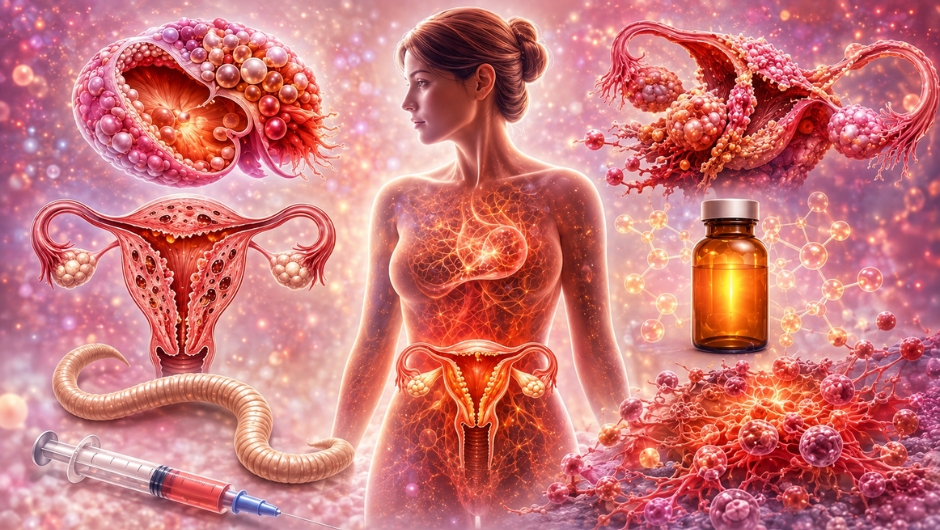
When we think of parasites, we usually imagine a stomach bug or a trip to a tropical country. Most people believe parasites only affect the gut. However, the truth is far more complex and for women, it can be deeply personal.
Emerging research and clinical observations suggest a surprising, often overlooked link: parasites can contribute to hormone disorders, pelvic inflammation, and conditions like estrogen dominance.
If you are struggling with heavy periods, pelvic pain, or unexplained hormone imbalances, it might be worth looking beyond the usual suspects. Here is what you need to know.
The “Silent” Invaders
Parasites don’t just stay in your intestines. Some are known to migrate or cause inflammation throughout the body, directly impacting the female reproductive system. Here are the six key culprits often linked to women’s health issues:
1. Schistosoma (Schistosomiasis)
This is the most well-documented parasite in connection to reproductive damage. It doesn’t just stay in the blood; it can invade the female reproductive tract directly.
- What it does: It causes chronic pelvic inflammation, scarring, and lesions.
- Impact: It can affect the cervix, uterus, and fallopian tubes, leading to abnormal bleeding and severe pelvic pain. This is the closest connection we have to a direct gynecological disease.
2. Toxoplasma gondii
This is a super common parasite, but its effects go beyond just flu-like symptoms.
- What it does: It disrupts the immune system and causes chronic, low-level inflammation.
- Impact: While it isn’t proven to cause conditions like adenomyosis directly, it acts as an “amplifier.” It worsens inflammatory reproductive conditions and can interfere with hormonal signaling in the brain and body.
3. Strongyloides (The Silent Stayer)
This parasite is notoriously tricky because it can persist quietly in the body for years without severe symptoms.
- What it does: It creates systemic (whole-body) inflammation and contributes to gut permeability (“leaky gut”).
- Impact: By impairing digestion and increasing inflammation, it creates an environment where hormone disruption thrives, leading to chronic fatigue and immune imbalance.
4. Roundworm (Ascaris)
This is one of the most common parasites globally.
- What it does: It triggers immune activation, gut inflammation, and histamine reactions.
- Impact: When you combine Histamine + Estrogen + Inflammation, you get a “perfect storm.” This can trigger insulin resistance and worsen pelvic inflammation, making period pain and bloating significantly worse.
5. Pinworms (Enterobius vermicularis)
Often dismissed as a mild childhood annoyance, pinworms actually matter for women’s health.
- What it does: They can migrate out of the gut and irritate surrounding tissues.
- Impact: They don’t cause major damage alone, but they can worsen inflammation in the pelvic tissues, adding to the burden on the reproductive system.
6. Liver Flukes (Clonorchis / Fasciola)
These are a major factor for hormone balance and conditions like PCOS (Polycystic Ovary Syndrome).
- What it does: They slow down bile flow and overload the liver’s detox pathways.
- Impact: The liver is responsible for clearing excess estrogen from the body. When liver flukes are present, bile becomes sluggish. This leads to estrogen recirculation your body dumps estrogen into your bile, but your gut reabsorbs it instead of excreting it.
The Real Issue
Why do parasites cause so many hormonal issues? It comes down to a chain reaction:
- Sluggish Bile: Parasites (especially liver flukes) block the liver’s ability to flush out toxins and hormones.
- Constipation & Dysbiosis: When bile isn’t flowing, your gut bacteria become imbalanced (dysbiosis).
- Beta-glucuronidase Overgrowth: Bad bacteria create an enzyme called beta-glucuronidase.
- The Reabsorption Cycle: This enzyme “unlocks” the estrogen that your liver just tried to remove. The estrogen gets reabsorbed into your bloodstream instead of leaving your body.
The result? Estrogen Dominance.
When you have too much estrogen and not enough progesterone, you experience:
- Heavier, more painful periods.
- Uterine thickening (which can worsen adenomyosis).
- Worsening pelvic pain.
- Hormonal acne and mood swings.