
Aviraj Singh, 11 Years
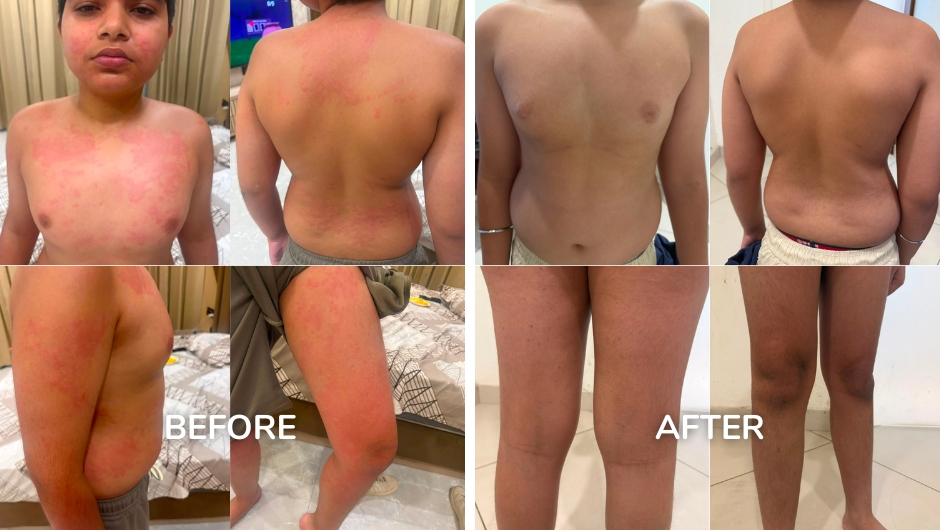
This case study follows Aviraj Singh, an 11-year-old child who presented with widespread inflammatory rashes that had taken over his chest, shoulders, arms, and trunk. The rashes weren’t just a few small spots they were extensive, recurrent, and causing severe discomfort that was affecting every aspect of his young life.
The Inflammatory Skin Conditions in Children
When a child develops a severe inflammatory skin disorder, the impact extends far beyond what appears on the surface. These conditions occur when the body’s immune system reacts abnormally, causing widespread inflammation that can affect large areas of the body.
For Aviraj, the symptoms were overwhelming:
Clinical Manifestations:
- Intense itching and irritation that made it difficult to sit still or focus
- Burning sensation on the skin that caused constant discomfort
- Weakness and fatigue that limited his physical activity
- Reduced appetite affecting his nutrition and growth
- Disturbed sleep due to nighttime itching and discomfort
Laboratory Evidence of Systemic Inflammation:
- ANA (Antinuclear Antibody): Positive at 1:100 (Speckled pattern)
- CRP (C-Reactive Protein): 54.4 mg/L significantly elevated (normal: <5 mg/L)
- ESR (Erythrocyte Sedimentation Rate): 25 mm/hr above normal range
The parents were deeply concerned as symptoms persisted despite conventional approaches, and blood reports continued to show ongoing systemic inflammation.
What Causes Inflammatory Skin Disorders?
A severe inflammatory skin disorder is characterized by redness, swelling, irritation, and inflammation resulting from abnormal immune system activity. Common symptoms include:
- Red or pink rashes covering significant body surface area
- Intense itching that worsens at night
- Burning or stinging sensations
- Raised patches or wheals
- Skin swelling and dryness
- Sleep disturbances
- Fatigue and reduced activity in severe cases
For Aviraj, these symptoms had become his daily reality.
The Ayurvedic Perspective on Childhood Skin Problems
Ayurveda offers a comprehensive understanding of why children increasingly develop skin and inflammatory problems. According to Ayurvedic principles, many childhood skin conditions arise from:
Digestive Weakness (Mandagni):
When a child’s digestive fire (Agni) becomes weak, it cannot properly process food, leading to the formation of Ama (toxins). These undigested metabolic byproducts accumulate in the body’s tissues.
Ama Accumulation:
Ama combines with aggravated Pitta (the dosha responsible for heat, metabolism, and transformation) and Rakta (blood tissue), manifesting as red rashes, itching, burning sensations, and recurrent skin irritation.
Modern Contributing Factors:
- Processed and packaged foods
- Excessive sugar and cold beverages
- Irregular eating habits
- Poor sleep patterns
- Excessive screen time and increased stress
- Reduced outdoor physical activity
These lifestyle factors create the perfect storm for immune dysfunction and inflammatory conditions to develop.
A Personalized Ayurvedic Treatment Approach
Under the guidance of Acharya Raghav Thukral Ji, Aviraj received a carefully crafted Ayurvedic treatment plan designed to address the root cause of his condition, not just suppress symptoms.
1. Reducing Inflammatory Activity
Ayurvedic formulations were selected for their anti-inflammatory properties to help cool the systemic inflammation reflected in his CRP and ESR levels.
2. Balancing Pitta and Rakta
Specialized herbs and therapies targeted the vitiated Pitta dosha and Rakta dhatu to address the underlying imbalance causing skin manifestations.
3. Supporting Natural Immune Regulation
The treatment aimed to modulate immune system activity, addressing the positive ANA result by supporting healthy immune function rather than suppressing it.
4. Correcting Digestion and Metabolism
Digestive support was prioritized to strengthen Agni, reduce Ama formation, and improve nutrient assimilation.
5. Calming Skin Irritation
External applications and internal medicines worked synergistically to soothe itching, burning, and redness.
The Results
Over time, Aviraj showed progressive improvement in both his skin symptoms and laboratory markers. The transformation was documented through follow-up testing and clinical observation.
Laboratory Improvements:
| Parameter | Before Treatment | After Treatment |
|---|---|---|
| CRP | 54.4 mg/L | 3.90 mg/L |
| ESR | 25 mm/hr | 10 mm/hr |
| ANA | Positive (1:100) | Negative |
The dramatic reduction in CRP from 54.4 to 3.90 mg/L (approaching normal levels) and ESR from 25 to 10 mm/hr demonstrated the significant decrease in systemic inflammation. Most notably, the ANA marker shifted from positive to negative, indicating restored immune balance.
Clinical Improvements:
- Red rashes reduced significantly as visible inflammation subsided
- Energy levels increased as the body redirected resources from fighting inflammation to healing and growth
- Burning sensation improved dramatically, providing relief from the constant discomfort
- Sleep became better as nighttime itching diminished
- Appetite improved allowing for better nutrition and recovery
The improvement was observed not only in reports but also in Aviraj’s overall day-to-day well-being. He could return to normal childhood activities, play, and learning without the constant burden of his skin condition.
A Parent’s Perspective
Seeing Aviraj covered with red rashes was very painful for us. He was constantly itching, uncomfortable, and unable to sleep properly. After treatment under Acharya Raghav Thukral Ji, the rashes gradually reduced, he became more active, and his follow-up reports improved. We are truly thankful for the care and guidance.”