
Kuldeep Singh
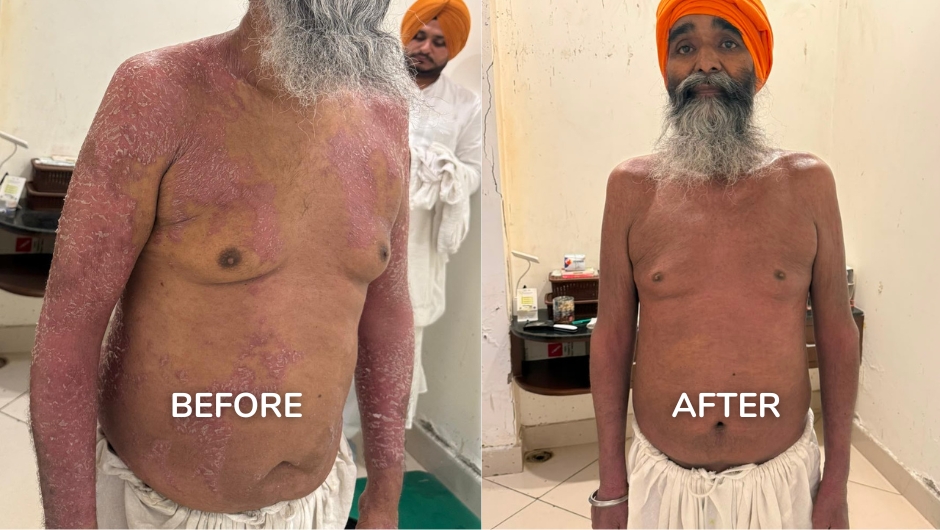
Psoriasis is more than just a skin condition it’s a chronic, immune-mediated inflammatory disorder that affects millions worldwide, impacting not only physical health but also mental well-being and overall quality of life. For those suffering from its most severe form, erythrodermic psoriasis the experience can be nothing short of devastating. This is the story of Kuldeep Singh, a patient who found lasting relief through a 40-day Ayurvedic treatment regimen under the guidance of Acharya Raghav Thukral Ji.
Understanding Erythrodermic Psoriasis
Erythrodermic psoriasis (EP) is the least common but most aggressive variant of psoriasis, affecting approximately 1–2% of psoriasis patients. Unlike other forms that present with localized plaques, erythrodermic psoriasis is characterized by generalized erythema (redness) and scaling that can cover the entire body surface.
The condition is more than just a cosmetic concern it can be life-threatening. The widespread inflammation disrupts the skin’s protective barrier, interferes with temperature regulation, and can lead to dangerous complications including:
- Dehydration and electrolyte imbalance
- Increased risk of infections
- Hair loss and nail involvement
- In severe cases, even heart failure
Patients typically experience extreme itching, burning sensations, pain, and systemic symptoms like fever and malaise.
The Ayurvedic Perspective
In Ayurveda, skin disorders like psoriasis are understood as Kushtha conditions arising from the imbalance of the three doshas (Vata, Pitta, Kapha). Erythrodermic psoriasis is often correlated with Eka Kushtha or Audumbara Kushtha, with a predominance of vitiated Pitta, Rakta (blood), and Vata.
Unlike modern medicine, which often focuses on managing symptoms with corticosteroids, retinoids, or immunosuppressants, Ayurveda aims to address the underlying root cause detoxifying the body, restoring doshic balance, and strengthening the immune system.
This holistic approach involves:
- Shodhana (bio-purification): Panchakarma therapies to eliminate toxins
- Shamana (palliative therapy): Herbal medications to pacify aggravated doshas
- Sthanika Chikitsa (local therapies): Topical applications for symptomatic relief
- Dietary modifications and lifestyle changes
The Case Study: Kuldeep Singh’s
Kuldeep Singh came to Acharya Raghav Thukral Ji suffering from erythrodermic psoriasis a condition that had likely caused him immense physical discomfort and emotional distress. The widespread redness, scaling, and itching that characterise this condition can make even simple daily activities challenging.
What makes this case particularly remarkable is the duration and outcome of the treatment. Within just 40 days of Ayurvedic intervention, Kuldeep Singh experienced permanent relief from his symptoms.
The Treatment Approach
While the specific medications and therapies used in Kuldeep Singh’s case would have been tailored to his unique constitution (Prakriti) and the stage of his condition, Ayurvedic management of erythrodermic psoriasis typically follows a structured protocol:
1. Internal Medications
Herbal and herbomineral formulations are prescribed to address the underlying doshic imbalance. Commonly used medicines include Kaishora Guggulu, Gandhaka Rasayana, and Panchatikta Guggulu Ghrita. These formulations exhibit properties like Kushthaghna (anti-dermatitic) and Kandughna (anti-pruritic).
2. External Therapies
Medicated oils and herbal pastes are applied topically to soothe inflammation, soften scales, and promote healing. Neelibringadi Taila and other coconut oil-based formulations are often used for their soothing and anti-inflammatory properties.
3. Dietary and Lifestyle Modifications
A strict dietary regimen is a cornerstone of Ayurvedic psoriasis treatment. Patients are typically advised to avoid spicy, sour, and fermented foods, as well as non-vegetarian items that can aggravate Pitta dosha. Stress management through techniques like meditation and pranayama is also emphasized, as stress is a known trigger for psoriasis flare-ups.
4. Regular Follow-ups
Consistent monitoring ensures that the treatment remains effective and allows for adjustments as needed.
Why Ayurveda Works for Erythrodermic Psoriasis
The success of Ayurvedic treatment in cases like Kuldeep Singh’s is not an isolated incident. Scientific literature increasingly supports the efficacy of Ayurveda in managing severe psoriasis:
- A case report published in the Journal of Ayurveda and Integrative Medicine documented a two-year multimodal Ayurveda treatment showing notable efficacy in managing chronic plaque and erythrodermic psoriasis, with no reported adverse events or side effects.
- Another study on psoriatic erythroderma treated with Ayurvedic herbomineral preparations reported complete remission with no relapse during a follow-up period of one and a half years.
- Research on severe erythrodermic psoriasis found that a combination of Sodhana, Shamana, and Sthanika Chikitsa resulted in positive outcomes, with Visual Analog Scale (VAS) scores resolving from 8 to 0 after treatment.
The Role of the Ayurvedic Practitioner
Acharya Raghav Thukral Ji represents a lineage of Ayurvedic expertise. As a fourth-generation expert with extensive research on autoimmune disorders, his approach is not about instant miracles but rather long-term treatments that address the root cause of the condition.
This distinction is crucial. Modern treatments often provide temporary relief but fail to address the underlying systemic imbalance, leading to recurrent flare-ups. Ayurveda, by contrast, works to restore equilibrium at the deepest level, offering the possibility of sustained remission.